Wall Ball Repeatable AMRAP
wall ball wod
AMRAP 12
12 wall balls
8 controlled air squats
Keep every round within a consistent pace
By Borja Bes — CrossFit Athlete & Hyrox Finisher
Technique demonstration
Watch the full movement, then use the original coaching image to check the key position.
Wall-Ball Efficiency Tips
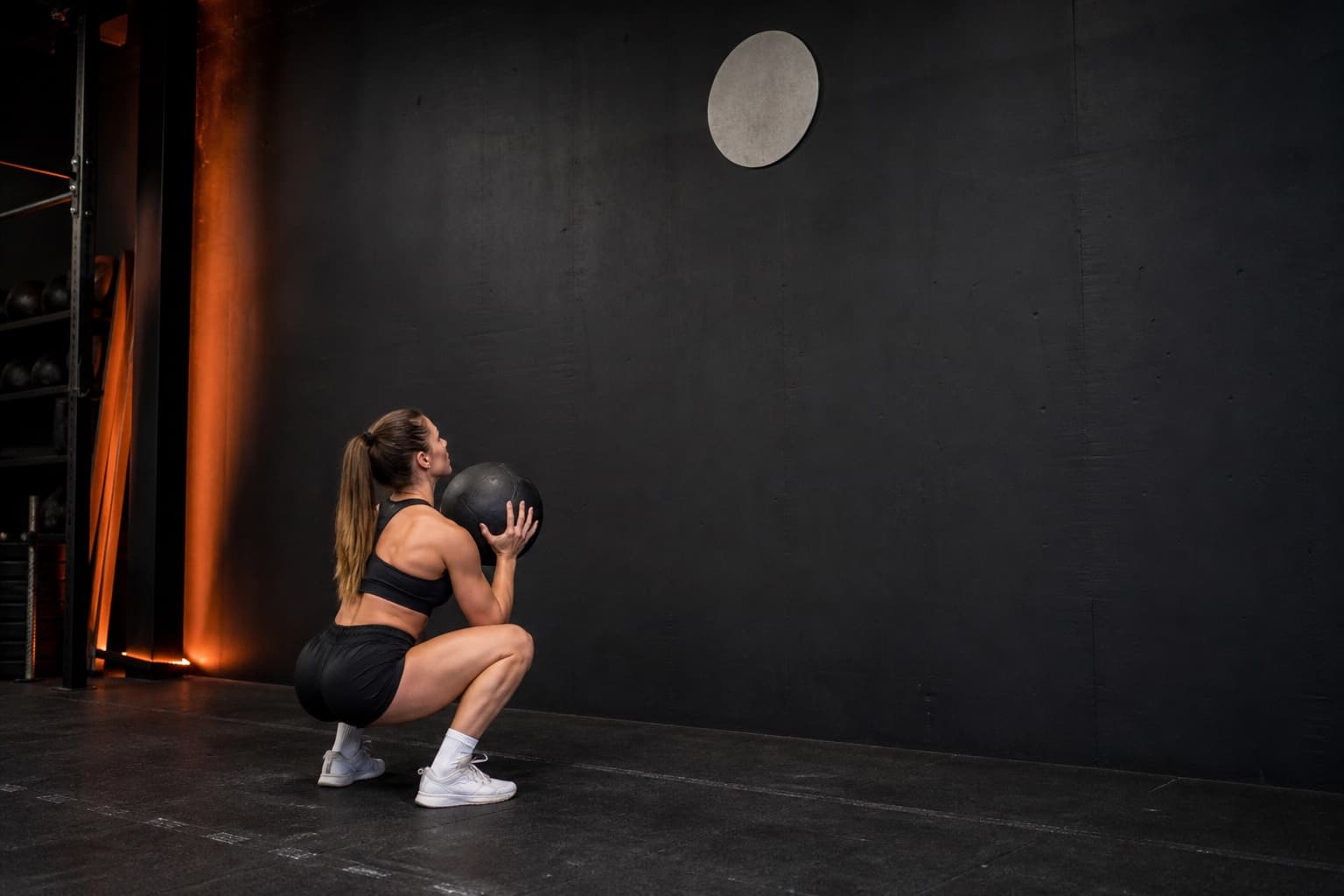
Key position
Catch the ball close with elbows under it, keep the heels down and use the next squat to absorb the load.
Video by CrossFit · reviewed 2026-08-06
Wall balls combine a full-depth squat with an explosive overhead throw to a target — 10 feet for men, 9 feet for women. The medicine ball is thrown from the bottom of the squat using full leg drive, then caught on the way down and immediately recycled into the next rep. Karen — 150 wall balls for time at 20/14 lb — is the most punishing wall ball benchmark in CrossFit and a reliable test of lower body endurance and cardiovascular capacity. Wall balls appear in multiple Hero WODs and require a consistent rhythm to survive in large sets.
Quick answer
Wall balls are best for HYROX and CrossFit squat-to-throw endurance. Keep the ball close, breathe with a repeatable rhythm and let the legs drive the throw instead of pressing early.
The wall ball is a full squat-to-throw pattern that blends knee and hip extension with trunk stiffness and timing. Efficiency depends on staying stacked, receiving the ball smoothly, and recycling out of the catch without an extra pause. In Hyrox, wall balls are not just a leg endurance test. They disrupt breathing, tax the quads, and punish anyone whose rhythm breaks before compromised running resumes.
Hyrox Wall Balls standards: OPEN — Men: 6 kg × 100 reps · Women: 4 kg × 100 reps. PRO — Men: 9 kg × 100 reps · Women: 6 kg × 100 reps. Event-specific rulebooks and athlete briefings remain the final authority.
Muscles Worked
Equipment
| Best for | HYROX race preparation, CrossFit conditioning and high-repetition squat-to-press coordination. |
|---|---|
| Avoid if | You cannot meet the target safely, squat pain changes your depth, or the ball repeatedly pulls you out of balance. |
| Scaling | Lighter ball (10/8 lb), lower target (8 ft), full-depth squat to a box then throw. |
Stand 1-2 feet from the wall, feet shoulder-width, medicine ball held at the chin.
Perform a full air squat — hip crease below the knee, chest tall.
As you drive out of the squat, use your legs to propel the ball upward.
Release the ball, aiming for the target (10 ft men / 9 ft women).
Catch the ball as it returns, using the descent to absorb it and transition immediately into the next squat.
Standing too far from the wall — increases the throw angle and makes catching harder.
Not reaching full squat depth — hip crease must pass below the knee.
Throwing with arms only rather than generating power from the legs.
Catching the ball high and breaking the rhythm — let it come to you at chest height.
For Karen (150 reps), break into consistent sets of 10-15 from rep one rather than grinding for 30+ early.
Breathing pattern: inhale on the way down, exhale on the throw.
A slightly raised heel (from a worn shoe or small elevation) helps athletes with limited ankle mobility reach depth.
Tempo Catch-and-Drive
Use a lighter ball and slow the catch for 3 seconds before driving out, teaching the athlete to absorb cleanly and stay stacked in the bottom.
Breathing Ladder Sets
Perform short sets with a fixed inhale-on-descent, exhale-on-throw rhythm so the wall ball pattern stays efficient under rising heart rate.
Test your new technique with a customized Wall Ball session here. Open the Hyrox generator.
Easier / Beginner
Lighter ball (10/8 lb), lower target (8 ft), full-depth squat to a box then throw.
Harder / Advanced
Heavier ball (30/20 lb), higher target.
Training Examples
wall ball wod
AMRAP 12
12 wall balls
8 controlled air squats
Keep every round within a consistent pace
wall ball conditioning
Every 3:00 x 6 rounds
12 wall balls
8 controlled bodyweight reps
Rest for the remainder; avoid a first-round sprint
20 lb (9 kg) for men to a 10-ft target, 14 lb (6 kg) for women to a 9-ft target. 150 reps for time. Scaling is typically 14/10 lb for intermediate athletes.
OPEN Wall Balls — Men: 6 kg × 100 reps · Women: 4 kg × 100 reps. PRO Wall Balls — Men: 9 kg × 100 reps · Women: 6 kg × 100 reps. Event-specific rulebooks and athlete briefings remain the final authority.
Wall balls create a heavy mix of quadriceps fatigue, trunk bracing demand, and breathing disruption. If you lose rhythm or catch the ball too high, the transition back into running feels dramatically more expensive.
The mistake most athletes make in Karen is going out too fast — big sets of 20-30 in the first half, then grinding singles when the legs go. A better strategy: establish a conservative set size from rep one (10-15 reps) and rest only 3-5 breaths between sets. Consistency beats heroics. Athletes who go 15×10 almost always beat athletes who go 30-20-15-singles.
Hitting the target but not reaching full squat depth. Judges look for the hip crease to clearly pass below the top of the knee before the athlete drives up to throw. Fatigue makes athletes start squatting shallow without realising it — usually between reps 50-100. Consciously check your depth every 10-15 reps in long sets.
Build It Into a Workout
Move from station mechanics to race-specific training. Build a Hyrox workout around Wall Ball, your level, and the equipment you actually have.
Generate a WOD that includes this movement, calibrated to your level and equipment.