Thruster Repeatable AMRAP
thruster wod
AMRAP 12
6-8 thrusters at a sustainable load
8 controlled air squats
Keep every round within a consistent pace
By Borja Bes — CrossFit Athlete & Hyrox Finisher
Technique demonstration
Watch the full movement, then use the original coaching image to check the key position.
The Thruster: CrossFit Foundational Movement
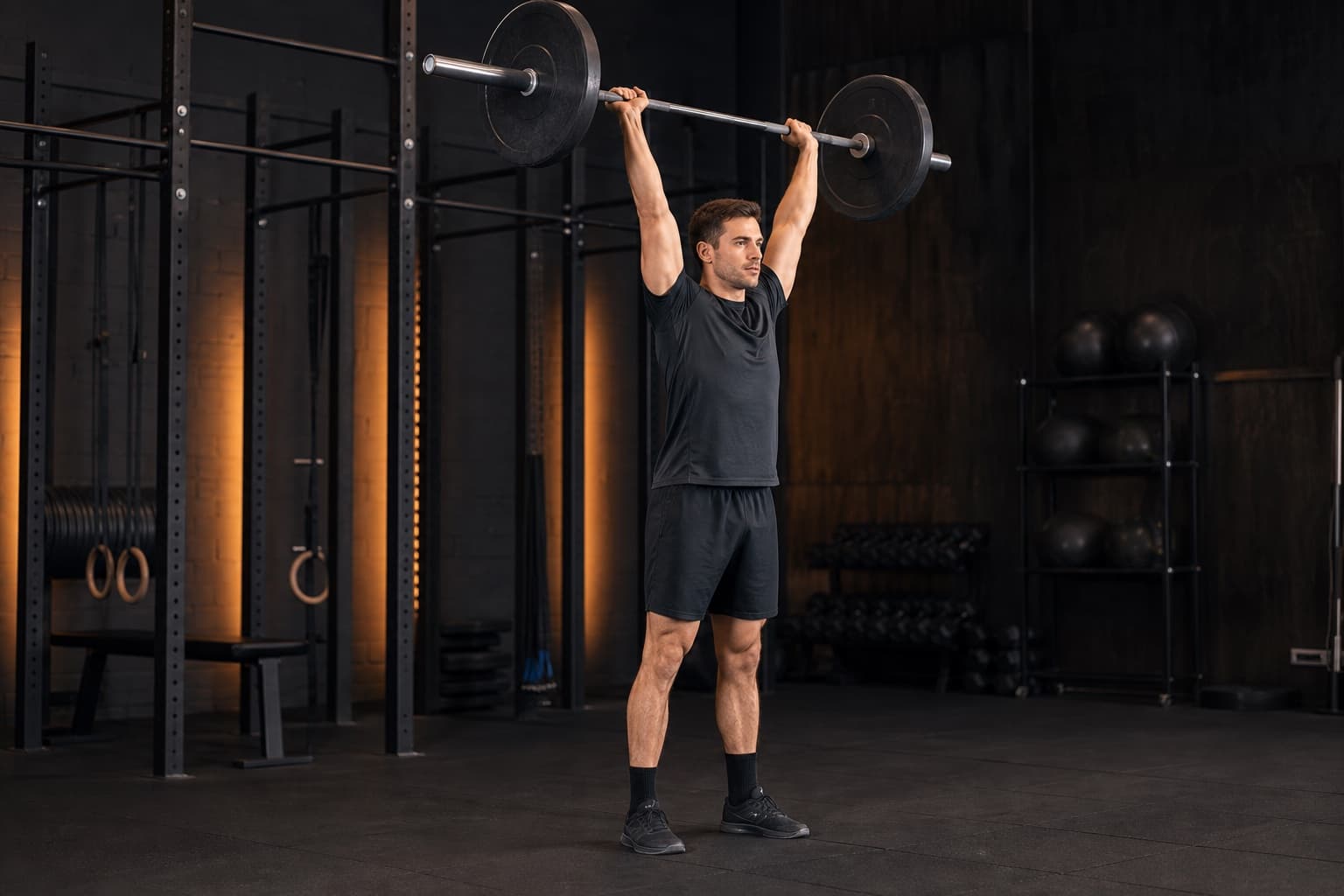
Key position
Drive through the legs, then finish with active shoulders and the bar balanced over the middle of the feet.
Video by CrossFit · reviewed 2026-08-06
The thruster is CrossFit's signature combined movement — a front squat driven directly into a push press in one continuous motion. It is arguably the most metabolically demanding single movement in CrossFit because it requires every major muscle group to fire in sequence. Fran (21-15-9 thrusters and pull-ups at 95/65 lb) is the most iconic benchmark in CrossFit, and the thruster is why Fran hurts as much as it does. The load is moderate by strength standards, but the combination of squat depth, hip drive, and overhead lockout cycling at speed creates a unique cardiovascular and muscular challenge.
Quick answer
The thruster is best for CrossFit workouts that combine squat strength with overhead conditioning. Use the leg drive to move the bar and finish stacked overhead rather than turning every rep into a strict press.
Muscles Worked
Equipment
| Best for | CrossFit metcons, front-squat-to-press coordination and full-body barbell conditioning. |
|---|---|
| Avoid if | Front-rack or overhead pain changes the path, squat depth collapses, or the bar drifts forward at lockout. |
| Scaling | Reduce load, goblet thruster (single dumbbell or kettlebell), front squat + push press as separate movements. |
Start with the bar in a front rack position — bar resting on the front of the shoulders, elbows high, grip just outside shoulder-width.
Perform a full front squat: hip crease below knee, torso upright, elbows up throughout.
Drive out of the squat with maximum hip extension.
Use the hip drive to press the bar overhead — do not stop the bar at the shoulders.
Lock out the bar overhead — arms fully extended, bar over the heels, head through.
Lower the bar back to the front rack and immediately begin the next squat.
Elbows dropping during the squat — loses the front rack and forces the bar forward.
Pausing at the top of the squat before pressing — kills the hip drive and makes the press harder.
Not achieving full lockout overhead before starting the descent.
The thruster is one motion, not two — the press begins before you are fully upright. The hip drive feeds directly into the bar.
For Fran, "cycling" the bar (controlled touch-and-go front rack) maintains rhythm better than re-cleaning each rep.
Easier / Beginner
Reduce load, goblet thruster (single dumbbell or kettlebell), front squat + push press as separate movements.
Harder / Advanced
Increase load, dumbbell thrusters (heavier relative demand due to bilateral deficit).
Training Examples
thruster wod
AMRAP 12
6-8 thrusters at a sustainable load
8 controlled air squats
Keep every round within a consistent pace
thruster conditioning
Every 3:00 x 6 rounds
6-8 thrusters at a sustainable load
8 controlled bodyweight reps
Rest for the remainder; avoid a first-round sprint
95 lb (43 kg) for men, 65 lb (29 kg) for women. This is the RX standard. Scaling options include 75/55 lb for intermediate athletes and lower loads for beginners.
The thruster combines two of the most demanding movement patterns (squat and press) in one continuous rep. It demands maximum output from the legs, core, and shoulders simultaneously, while the front rack position restricts breathing. This creates the unique, lung-burning demand that defines workouts like Fran.
No — never pause at the bottom during a set of thrusters. The moment you stop moving at the bottom, you lose the elastic energy that feeds the press. The squat drives directly into the overhead push. Any pause turns each rep into two separate movements and costs you significant speed and efficiency over a full set.
Touch-and-go cycling is the key. Lower the bar with control back to the front rack — do not drop it to your hips and re-clean every rep. Establish a breathing pattern: exhale on the press, inhale on the descent. For high-rep sets like Fran, plan your breaks in advance (e.g., 7-7-7 rather than going to failure on your first set) and stick to them.
Build It Into a Workout
Use the generator to turn this movement into a full session based on your level, equipment, and training goal. This is the fastest way to move from movement knowledge to real training.
Generate a WOD that includes this movement, calibrated to your level and equipment.