Sled Pull Repeatability Intervals
sled pull workout
Every 2:30 x 6 rounds
15-20 m Sled Pull
200 m easy run or 60 sec cardio
Use the remaining time to reset safely
By Borja Bes — CrossFit Athlete & Hyrox Finisher
Technique demonstration
Watch the full movement, then use the original coaching image to check the key position.
HYROX Sled Pull Techniques to Crush Your Next Race
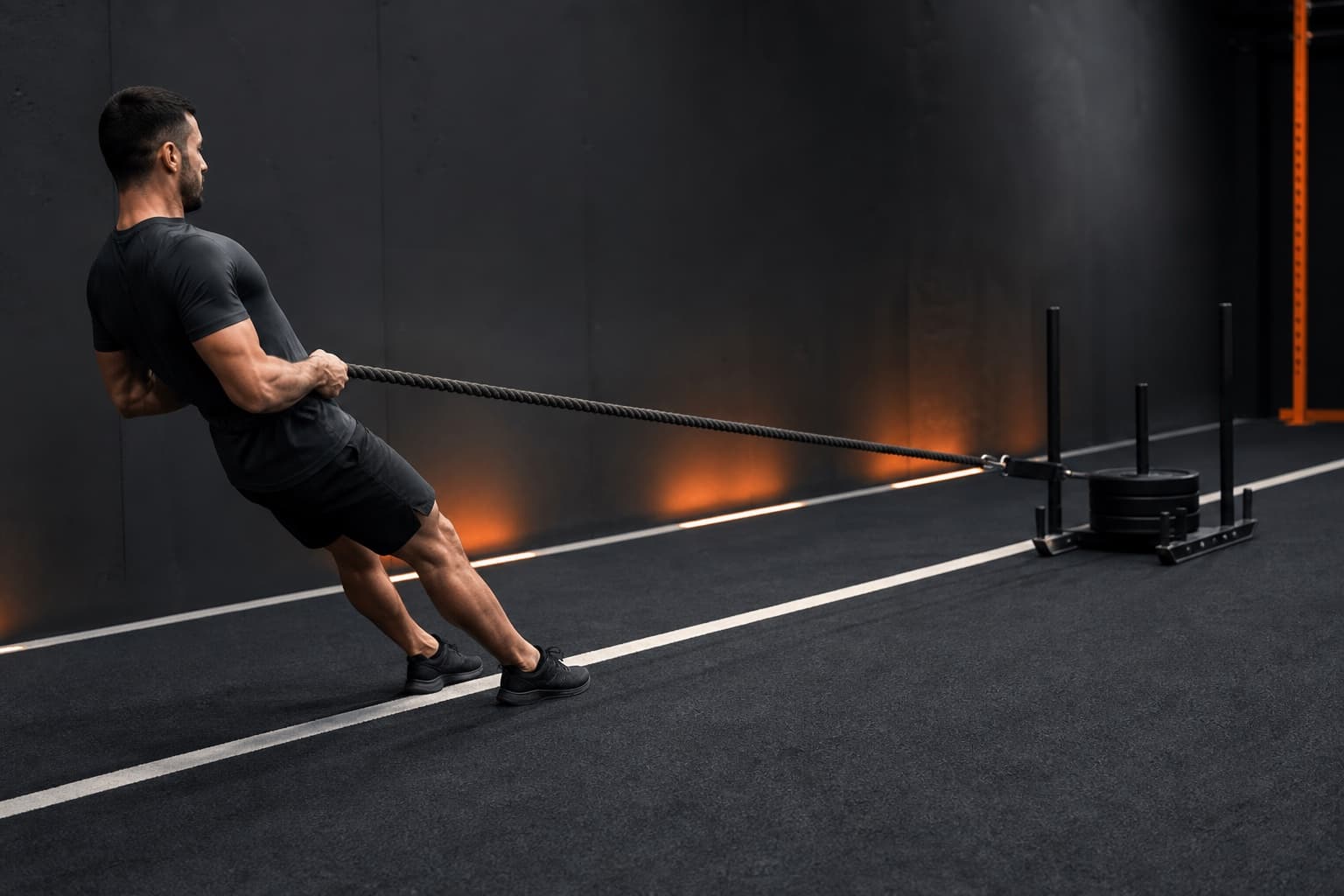
Key position
Sit your weight behind the rope, brace the trunk and finish each pull near the ribs before reaching again.
Video by Rox Lyfe · reviewed 2026-08-06
The sled pull is the Hyrox station that punishes poor rhythm more than almost any other. Athletes need to lean back, stay connected through the trunk, and pull the rope in efficient hand-over-hand cycles while continuing to walk the feet backwards with control. When the pull gets sloppy, the arms overwork, the hips stop contributing, and the station drags on long enough to wreck both grip and breathing. In race terms, the best sled pull athletes are not yanking randomly. They are creating a clean backward lean, keeping the rope path organised, and protecting enough posture to run well immediately after the station.
Quick answer
The sled pull is best for HYROX grip, back and posterior-chain endurance. Stay behind the rope and make every hand-over-hand pull move the sled instead of standing upright between efforts.
The sled pull rewards leverage, not random aggression. Efficient athletes keep a backward lean, stable foot pressure, and lat-driven rope cycles so the load moves with each hand-over-hand pull. The centre of gravity should stay organised behind the rope line while the trunk remains braced. If the athlete stands too tall or rows with the arms only, efficiency collapses and grip dies long before the station is over.
Hyrox Sled Pull standards: OPEN — Men: 103 kg including sled · Women: 78 kg including sled. PRO — Men: 153 kg including sled · Women: 103 kg including sled. These totals include the sled. Event-specific rulebooks and athlete briefings remain the final authority.
Muscles Worked
Equipment
| Best for | HYROX station practice, grip endurance and controlled pulling strength under cardiovascular fatigue. |
|---|---|
| Avoid if | You cannot keep the rope lane clear, the load pulls you off balance, or shoulder or low-back pain changes the pull. |
| Scaling | Reduce load, shorten the lane, or use a heavy seated rope pull to learn sequencing. |
Set a stable backward lean with soft knees and a braced trunk before beginning the pull.
Drive through the feet and maintain tension through the hips as you pull the rope hand over hand.
Keep the elbows travelling close to the body so the lats stay involved rather than turning it into an arm-only row.
Organise the rope in smooth cycles and avoid crossing the hands or yanking from awkward positions.
Stay balanced through the full 50 metres so you can leave the station without stumbling into the next run.
Standing too upright, which removes the leverage needed to move the sled efficiently.
Pulling with the arms only and forgetting to keep tension through the legs, hips, and trunk.
Letting the rope path get messy, which breaks rhythm and adds unnecessary pauses under fatigue.
Think lean-back and lock-in before every pull cycle instead of rushing the first grabs.
Your feet should keep helping the sled move — do not freeze the lower body and turn the station into a biceps test.
If the rope starts to drift, reset the rhythm quickly before grip and breathing spiral.
Rope Rhythm Repeats
Use a lighter sled and practise smooth 3-5 pull sequences, resetting posture each time so the rope path stays organised and repeatable.
Lean-Back Iso Holds
Hold the pull position for 15-20 seconds with tension through the feet, hips, and trunk to learn how to keep leverage without drifting upright.
Test your new technique with a customized Sled Pull session here. Open the Hyrox generator.
Easier / Beginner
Reduce load, shorten the lane, or use a heavy seated rope pull to learn sequencing.
Harder / Advanced
Use official Hyrox load, extend the distance, or pair the pull with a 1 km run at race effort.
Training Examples
sled pull workout
Every 2:30 x 6 rounds
15-20 m Sled Pull
200 m easy run or 60 sec cardio
Use the remaining time to reset safely
sled pull conditioning
5 rounds at a sustainable pace
15-20 m Sled Pull
8 controlled Sled Push reps
Keep posture identical from round one
OPEN Sled Pull — Men: 103 kg including sled · Women: 78 kg including sled. PRO Sled Pull — Men: 153 kg including sled · Women: 103 kg including sled. These totals include the sled; event-specific rulebooks and athlete briefings remain the final authority.
Because the station rewards leverage, rope organisation, and trunk tension. Athletes who pull only with the arms lose rhythm quickly and pay for it in grip, breathing, and the following run.
It should feel like a repeated lean-back-and-drive pattern where the rope cycles stay smooth and the load never fully dies between pulls.
Build It Into a Workout
Move from station mechanics to race-specific training. Build a Hyrox workout around Sled Pull, your level, and the equipment you actually have.
Generate a WOD that includes this movement, calibrated to your level and equipment.